

The Hymns
1604
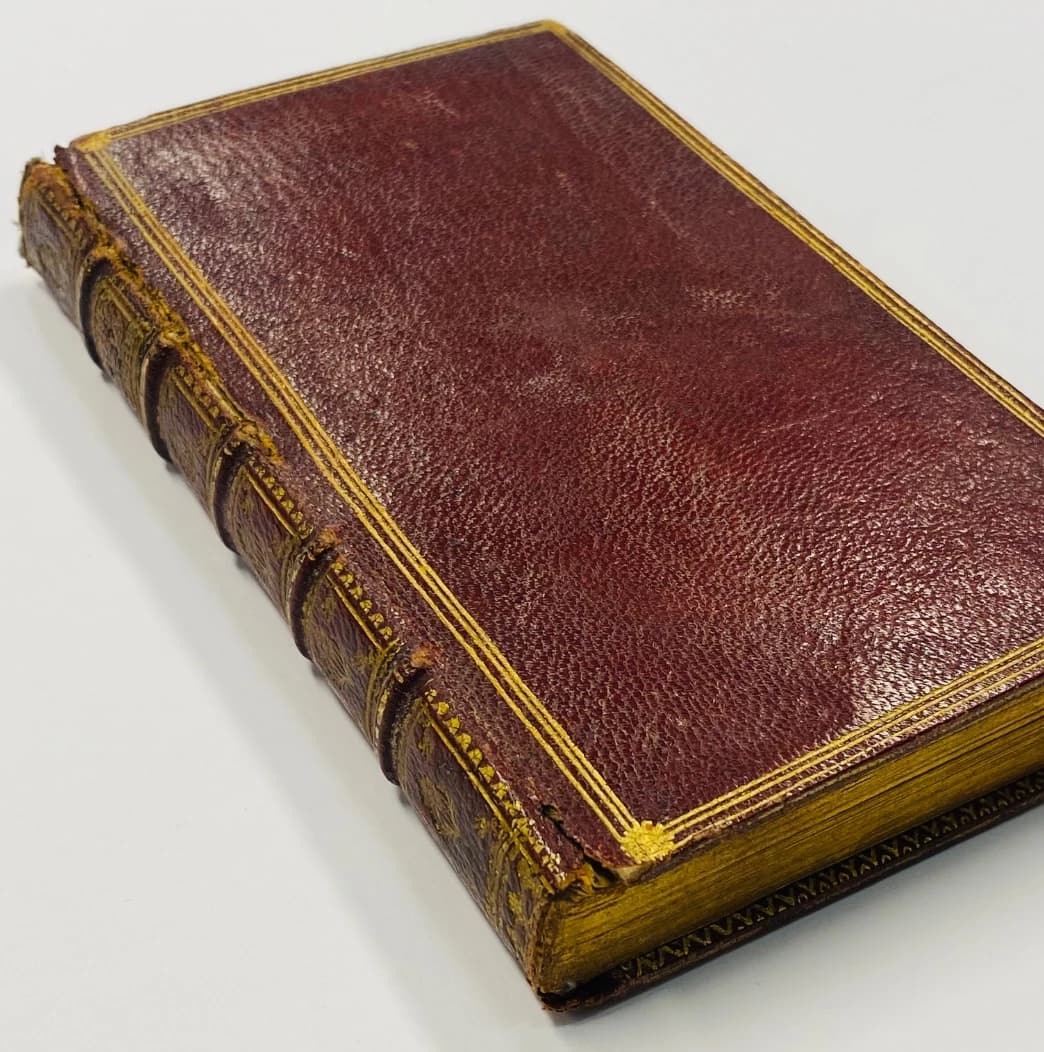
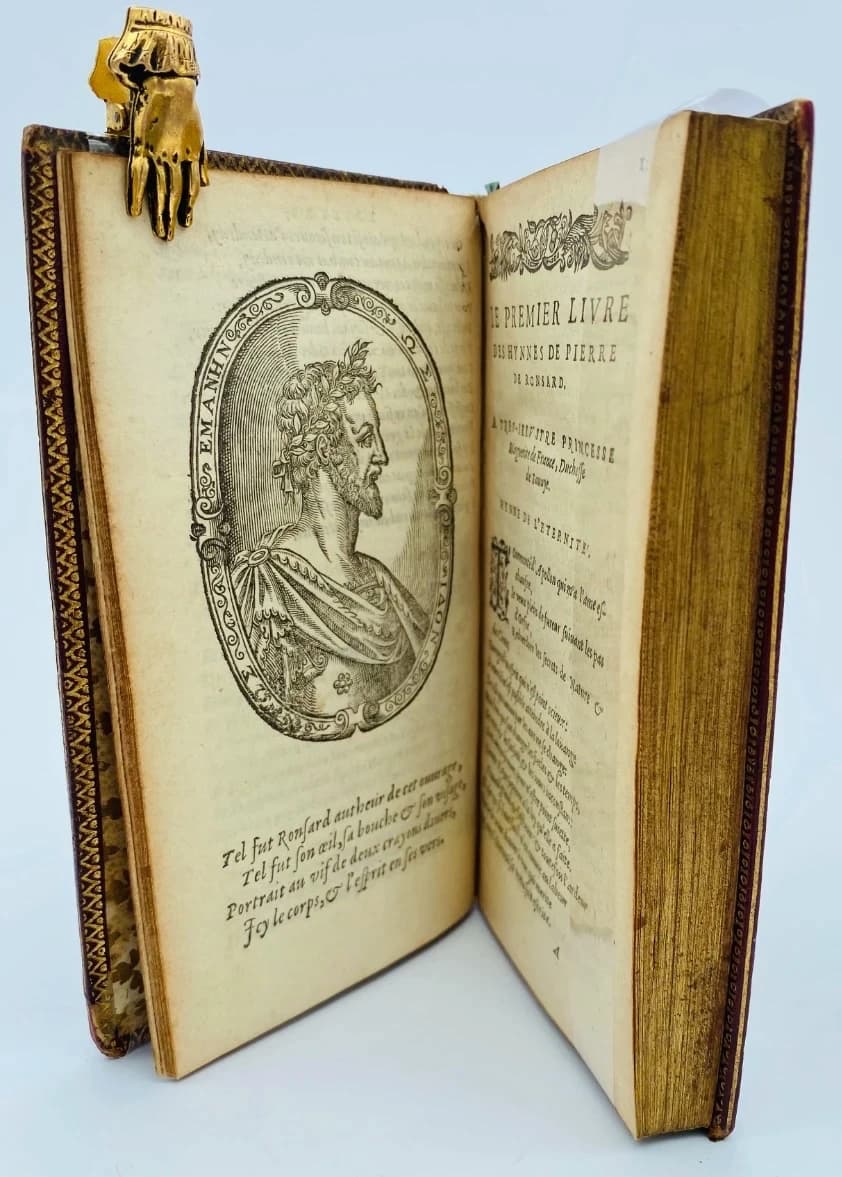
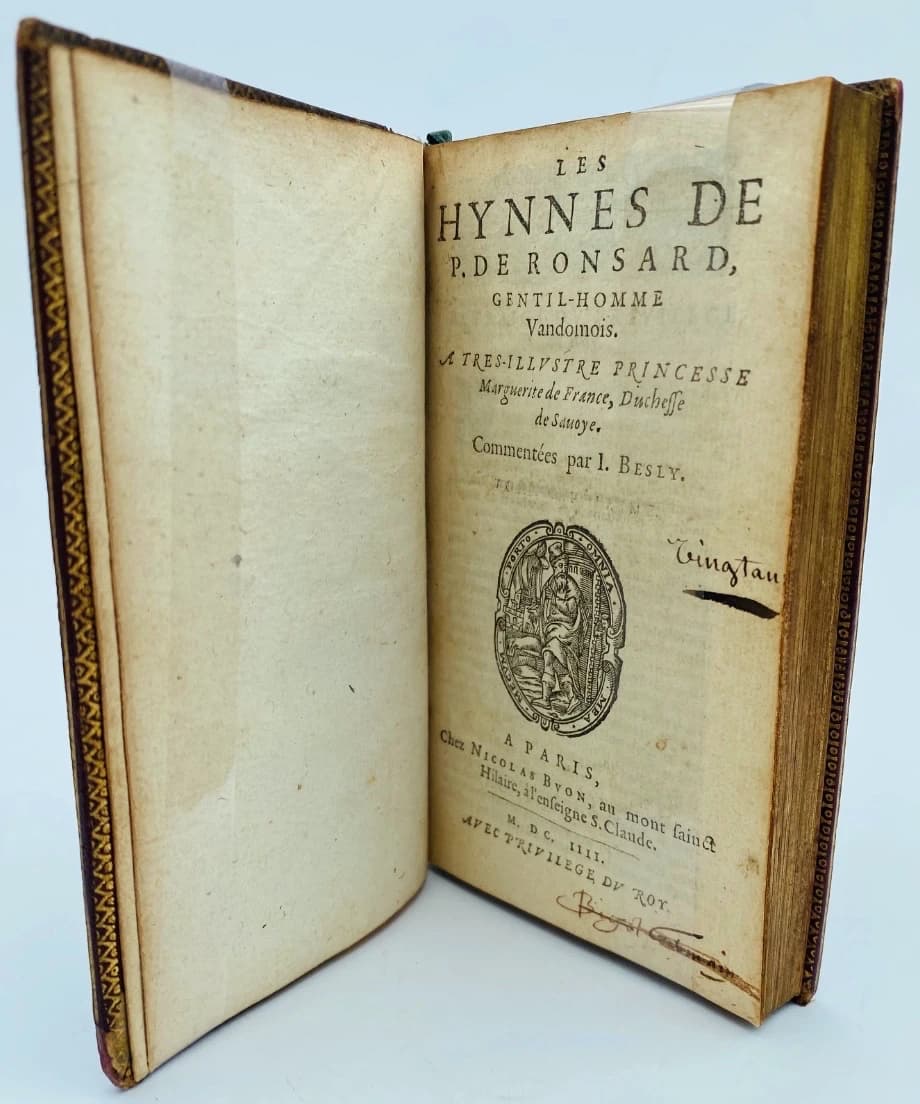
The Hymns Pierre de Ronsard. Gentleman of Vendôme. To the very illustrious Princess Marguerite of France, Duchess of Savoy. Commented by I. Besly. At the end of the work, Abridged French Poetic Art by P. de Ronsard. Paris, at Buon 1604. Sextodecimo (16mo) (13.3 x 8.2 cm) of 6 unnumbered leaves + 297 pages + 1 unnumbered leaf + 12 pages of Abridged French Poetic Art by P. de Ronsard. Binding in full red morocco leather late 17th / early 18th century, spine with 5 raised bands with title piece and compartments adorned with floral motifs. Triple fillets on the boards. Rollers on the edges and endpapers in Dominoté paper. Rubbing to corners and trimmed headcaps, joint split on 6 cm on the upper board. Interior fresh and without foxing. Solid binding despite the fragility of the joints. A medallion portrait of Ronsard embellishes this edition. This work in one volume is complete in itself, being part of the 1604 edition published by Nicolas Buon in 5 volumes. This sought-after edition, called the "tenth collective edition," is the one that establishes Ronsard's texts. It is interesting because it represents one of the great reference editions, published only nineteen years after the poet's death, at a time when his work is still considered a major model of French poetry. It is distinguished by its scholarly and meticulous character: the text is revised and augmented with commentary. Pierre de Ronsard (1524, Couture-sur-Loir - 1585, Tours). He is the great poet of the French Renaissance and the leader of the Pléiade. Ronsard profoundly renewed the French poetic language by drawing inspiration from ancient Greek and Latin authors. The Hymns blend philosophical, mythological, and scholarly poetry: Ronsard celebrates the gods, the forces of nature, the heroes, and the great principles of the world.
The Hymns Pierre de Ronsard. Paris, 1604, ancient reference edition. In very fine full Morocco leather binding, early 18th century.
This work has been sold


